
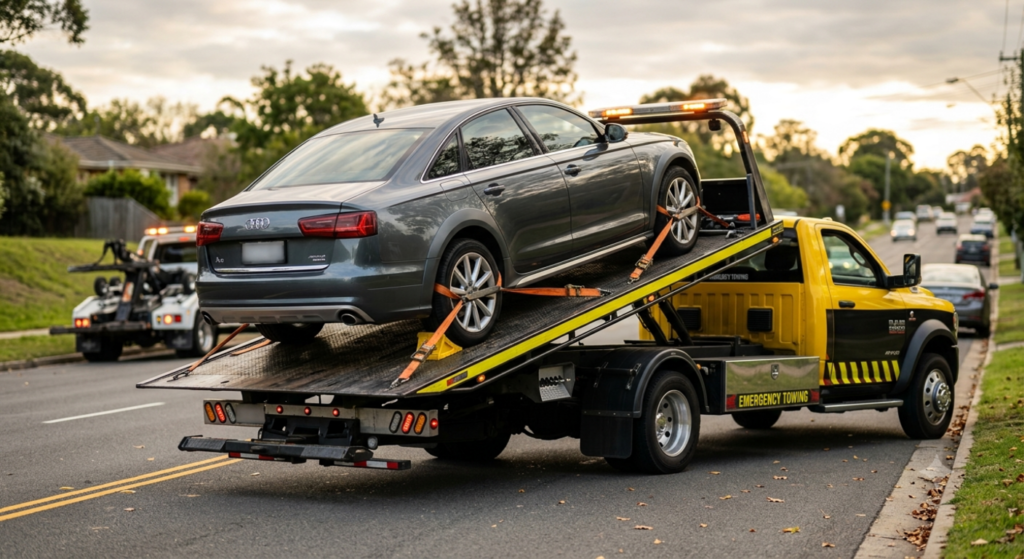
Vehicle breakdowns often happen without warning, leaving drivers stranded on busy roads, highways, parking lots, or unfamiliar areas. In such situations, most people immediately search for a 24/7 towing service near me to get fast roadside assistance and safely move their vehicle. However, one important detail often gets overlooked during these stressful moments, which is the type of towing method being used.
Many drivers assume that every vehicle can be towed the same way, but that is not true. Modern vehicles now come equipped with advanced drivetrains, sensitive transmission systems, low ground clearance, electronic components, and specialized engineering, all of which require proper handling during transportation. A towing method that works safely for one vehicle may not be suitable for another.
This is exactly why understanding different towing methods has become more important today. Choosing the wrong towing approach can sometimes lead to additional vehicle damage, unnecessary repair expenses, and mechanical issues that may not appear immediately after towing.
What Is Flatbed Towing and Regular Towing?
Before you decide, it helps to understand both options in simple terms.
Flatbed Towing
A flatbed tow truck carries your entire vehicle on a raised platform. All four wheels stay off the ground. The car remains stable from pickup to drop-off.
Regular Towing (Wheel Lift or Hook and Chain)
Regular towing lifts either the front or rear wheels while the other set remains on the road. The vehicle rolls behind the tow truck.
Both methods serve a purpose. The problem starts when the wrong method is used for the wrong vehicle.
Why Flatbed Towing Becomes Necessary for Certain Vehicles
Not every vehicle can safely handle regular towing. Many modern cars now come equipped with advanced drivetrains, sensitive transmission systems, lower-body designs, and electronic components that require extra protection during transport.
When the wrong towing method gets used, the vehicle may suffer mechanical damage even before it reaches the repair shop. In many cases, drivers do not notice the damage immediately. Problems often appear later in the form of transmission issues, alignment problems, suspension damage, or uneven tire wear.
Flatbed towing helps eliminate these risks because the entire vehicle remains securely lifted off the road during transport. This method provides better stability, reduces unnecessary movement, and protects important vehicle components from additional stress.
Certain vehicles specifically require flatbed towing because their engineering and design cannot safely tolerate rolling on two wheels during transport. This becomes especially important for:
- All-wheel-drive vehicles
- Electric vehicles
- Luxury and sports cars
- Accident-damaged vehicles
- Cars with low ground clearance
- Vehicles facing transmission or suspension issues
Choosing flatbed towing in these situations is not about convenience alone. It is about protecting the vehicle from avoidable damage and ensuring safer transportation from pickup to destination.
Signs Your Car Needs Flatbed Towing
You do not need to be a mechanic to make the right call. Watch for these signs:
- Your car has AWD or 4WD
- Your vehicle sits low to the ground
- The car does not start or has transmission issues
- The vehicle has been in an accident
- You own an electric or hybrid vehicle
- You need towing over a long distance
- If any of these apply, choosing a flatbed is the safer decision.
Final Thoughts
Flatbed towing is not just a premium option. For many vehicles, it is a requirement based on how they are built. Regular towing works only when the vehicle can safely handle wheel movement during transport.
If your vehicle ever breaks down in South Surrey or nearby areas, choose GRD Towing company, as they understand proper towing procedures and prioritize vehicle safety from pickup to drop-off.