
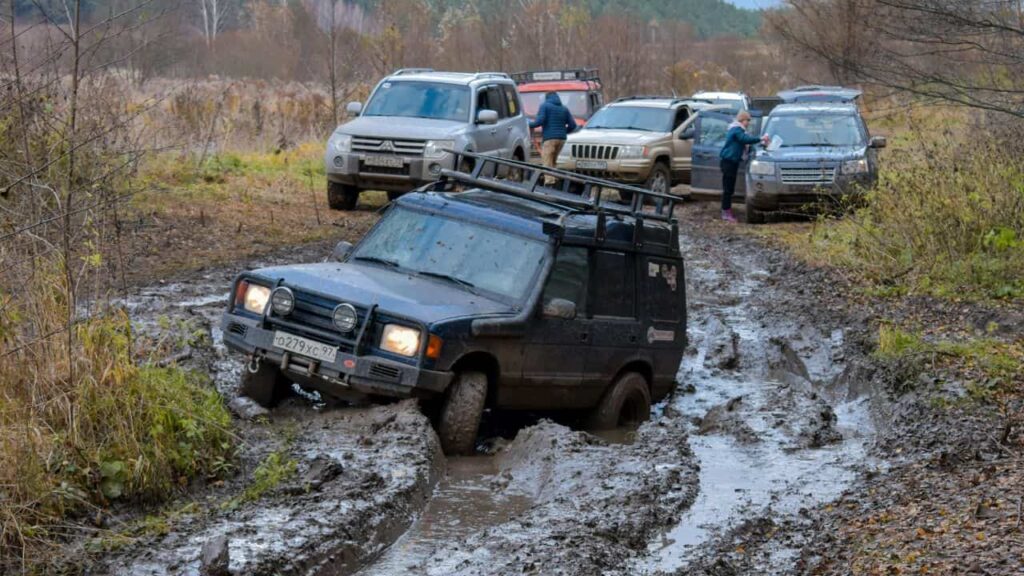
Being stuck in mud is something every driver hopes to avoid. It often happens without warning. You try to move ahead, and the wheels just spin. The car stays in place or sinks further. Most drivers face this on wet roads, parking edges, or unpaved areas after rain. The situation becomes worse when drivers try to force the vehicle out in a hurry. Mud removes traction, and without traction, power alone cannot help. Learning why vehicles get stuck and what mistakes to avoid helps you stay calm and make better decisions in that moment.
Here are the mistakes that you should avoid when your car is stuck in mud:-
Mistake 1: Pressing the Accelerator Too Hard Makes the Situation Worse
One of the first reactions drivers have is to press the accelerator harder. This feels logical, but it works against you. When you apply excessive power:
The tires spin faster than the ground can support.
- The tread fills with mud.
- The wheel loses all grip.
- The vehicle sinks deeper.
When your car is stuck in mud, it needs controlled movement, not force. Gentle acceleration allows the tires to search for grip. If the vehicle does not respond after a few careful attempts, continuing to press the pedal only increases the depth of the ruts and makes roadside recovery more difficult.
Mistake 2: Not Checking Which Wheels Are Driving
Many drivers do not know if their car is Front Wheel Drive, Rear Wheel Drive, or All Wheel Drive. This matters.
If your car is Front Wheel Drive, only the front tyres need traction. If it is Rear Wheel Drive, focus on the back wheels.
Look carefully:
- Which wheels are spinning?
- Which wheels are sinking?
Place traction material only under the driving wheels. This increases your chances when figuring out how to get a car out of mud properly.
Mistake 3: Using the Wrong Objects Under the Tires Can Be Risky
Some drivers place smooth or weak materials under the tires to gain traction. Plastic sheets, thin metal, or loose items often slide out quickly when the tire spins. These objects provide no grip and may damage the vehicle or cause injury.
Materials like Sand, gravel, wooden planks, and cardboard are far more effective at creating friction because they give the tires something to grip. Clearing excess mud before placing these materials improves the chance of success.
Mistake 4: Not Checking the Depth of the Mud
Many drivers react quickly when they see their vehicle stuck in mud. They press the accelerator without first stepping out to examine the situation. This reaction often pushes the tyres deeper into soft ground. Mud is rarely even. One side may appear firm while the other side sinks sharply.
If you do not check the depth, you may not realize how close the mud is to the axle or underbody. Once the vehicle settles lower, recovery becomes more difficult and costly. Always pause, step out safely, and inspect the tyres and ground condition. A quick inspection helps you decide whether to attempt self-recovery or call for professional roadside assistance.
Mistake 5: Trying to Pull the Car Without Proper Points
Some drivers attach ropes to random parts under the car. This can bend metal or break plastic covers.
If you attempt a pull:
- Use the designated tow hook only.
- Avoid jerking movements.
- Never attach to suspension arms or bumper brackets.
Vehicles come with designated tow points that distribute force safely. If these points are not clearly visible or you feel unsure, it is best to avoid towing attempts. A professional winch recovery service secures the vehicle correctly and prevents further mechanical issues.
Mistake 6: Waiting Too Long Before Calling for Help
Drivers often try for hours before calling for help. Continuous attempts deepen the rut and increase the difficulty of recovery. Early help reduces damage and saves time.
If your car does not move after a few controlled attempts, search for a winching service near you on Google and choose a trusted provider. These trained professionals will pull the vehicle safely without damaging tyres or suspension.
Mistake 7: Not Carrying Basic Recovery Tools
Many drivers travel without a basic recovery kit. When the car gets stuck, they have no tools to improve traction or clear mud. This lack of preparation turns a minor delay into a major breakdown.
A simple kit that includes a shovel, traction boards, gloves, and a strong tow rope can help in mild cases. These tools allow you to remove mud from around the tyres and create grip under the wheels. Preparation does not take much space, but it will be a great help during unexpected situations. If the vehicle still does not move, that is the right time to contact a recovery service before further damage occurs.
Mistake 8: Asking Untrained People to Push the Car
When a car gets stuck, people nearby often step in to push. While the intention is good, pushing without proper coordination can create safety risks. If the tyres suddenly catch grip, the vehicle may lunge forward. Someone standing too close can lose balance or get injured.
Pushing also does not fix the real issue if there is no traction under the wheels. Without grip, extra force only spins the tyres and digs deeper ruts. Instead of relying on unplanned help, focus on creating traction or seeking trained assistance. Professional recovery teams use appropriate equipment and controlled methods to safely pull the vehicle out without causing damage.
Final Say!
Getting stuck in mud can happen to any driver, but the way you respond makes all the difference. Rushing and forcing the vehicle often leads to deeper sinking and more damage. The safer choice is to stop, assess the situation, and call for help when needed.
GRD Auto Towing provides dependable roadside recovery and winch services when vehicles get stuck in mud or snow. Our trained team knows how to recover your car safely and get you moving again without added stress. Save our contact number so you always have reliable support when your vehicle gets stuck in any roadside emergency. We are available 24/7.